Showing posts with label Employment. Show all posts

Friday, March 14, 2014

J.P. Morgan: Strategic Shifts Amidst Changing Consumer Behavior

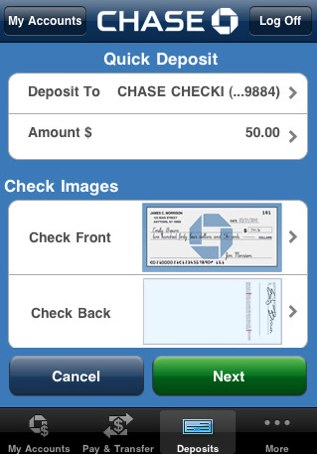
Chase Mobile Banking Application


Today, J.P. Morgan & Chase updated its forecast regarding employment cuts, announcing expected reductions of 8,000 jobs from its mortgage operations and retail branches over the course of 2014. These cuts are over 2,000 more than original projections.Furthermore , this employment reduction is on top of the 16,500 cuts made last year by the U.S. banking giant. 

However, total employment will be reduced by only 5,000 jobs due to the addition of 3,000 new jobs to the bank's compliance department. Compliance departments of major banks have become increasingly crucial since the '07-'08 global financial crisis. J.P. Morgan has agreed to over twenty billion dollars in settlements over just the past year, with other federal probes waiting in the wings. However, it is an acknowledged reality that demand for compliance expertise currently exceeds the pool of qualified personal, suggesting that money, and perhaps jobs, will be shifting gradually toward that area.

Legal issues aside, a great deal of J.P. Morgan’s strategic shift can be attributed to changing consumer behavior amidst advents in consumer banking technology. In addition to the employment cuts the bank also announced today that it would be curbing the expansion of its branch network. Over the past three years, J.P. Morgan added 360 new physical locations. However, customers’ growing reliance on paperless banking and automated teller machines has undercut the utility of the once essential brick-and-mortar banking stations. Moreover, the recent spike in online banking, namely the ability to cash checks through photos on encrypted mobile applications, has reduced demand for representatives and teller transactions.
--
Arthur Gosnell

Wednesday, February 5, 2014

Can the U.S. Afford the Affordable Care Act?

Democrats and Republicans have again entered into heated debate over the possible side effects of the newly adopted Affordable Care Act. Nonpartisan budget analysts have reported that, starting in 2017, the act will start to push the economy in a negative direction by dampening the supply of labor. Projections show a drop of 2.5 million laborers by the year 2024. This is mainly due to the Affordable Care Act affecting the previous relationship between employment and healthcare. The fact that healthcare is now independent of employment serves as a disincentive for the work force, where individuals are receiving this benefit regardless of their employment status. Furthermore, the lower labor participation rates are affecting the amount of taxable income in the economy. Republicans believe that the decrease in hours worked will have a substantial effect on the amount of tax moneys the government will inherit from income taxes over the next several years. This is certainly a dangerous position, especially with a government that is already looking into the eyes of a $17.2 trillion deficit.

Congressman Hakeem Jeffries
Democrats claim that the subsidies provided by the Affordable Care Act are freeing a large portion of the country from what the call a “job lock”, where individuals are unable to choose their work hours due to their dependence on their employer for healthcare benefits. Also, those who support the law are standing by the statistic that it will be responsible for the coverage of almost 13 million Americans this year alone. Hakeem Jeffries (D., NY) defended the Act; comparing it to the strict regulations put on child labor in the late 1930s. This shrunk labor participation rates, but was a necessary step to relieve the United States of its child labor problem. While many would see this as an extreme exaggeration, it poses the legitimate question of whether or not the law itself is worth the potential harm that it could bring to a slowly recovering US economy.
--
Jack McIlvaine